

What if the bed you buy for your toddler today was the same one they used to study for their matric exams a decade from now? Most parents view kids bedroom furniture as a fleeting purchase, a temporary stage that ends as soon as the next growth spurt hits. It's a frustrating cycle of outgrown frames and cluttered drawers that simply can't keep up with a child's changing life. You likely want a room that balances playful energy with refined design, yet you're tired of poor-quality materials that break under active use.
You can break this cycle by choosing pieces that serve as a long-term architectural investment. This guide shows you how to select and customise high-quality kids bedroom furniture that evolves alongside your child whilst maintaining a sophisticated aesthetic. We'll explore the latest 2026 design trends, including the impact of rising hardwood costs on the South African market and critical safety updates like the ASTM F1821-26 standard for toddler beds. You'll learn to create a stylish, organised sanctuary that reflects your child's personality from their toddler years through to their teens.
Key Takeaways
- Identify how adaptive design bridges the "Growth Gap" to ensure your investment transitions seamlessly from toddler years through to the teens.
- Understand the structural benefits of hardwood frames over mass-market composites to withstand the high-traffic demands of an active child's room.
- Evaluate the long-term cost-efficiency of bespoke kids bedroom furniture tailored to the unique architectural layouts of South African homes.
- Master the "Zones of Childhood" by using versatile sideboards and pedestals to maintain an organised environment for sleep, study, and play.
- Discover how to customise colours, fabrics, and textures to create a sophisticated sanctuary that reflects your child’s evolving personality.
Understanding Adaptive Design in Kids Bedroom Furniture
Designing a child's sanctuary requires a shift in perspective. Instead of viewing the room as a temporary nursery, we should treat it as an evolving environment that mirrors the child's growth. Adaptive kids bedroom furniture refers to pieces designed with the foresight to transition through various developmental milestones without losing their functional or aesthetic appeal. It is the difference between buying for the next twelve months and investing for the next twelve years.
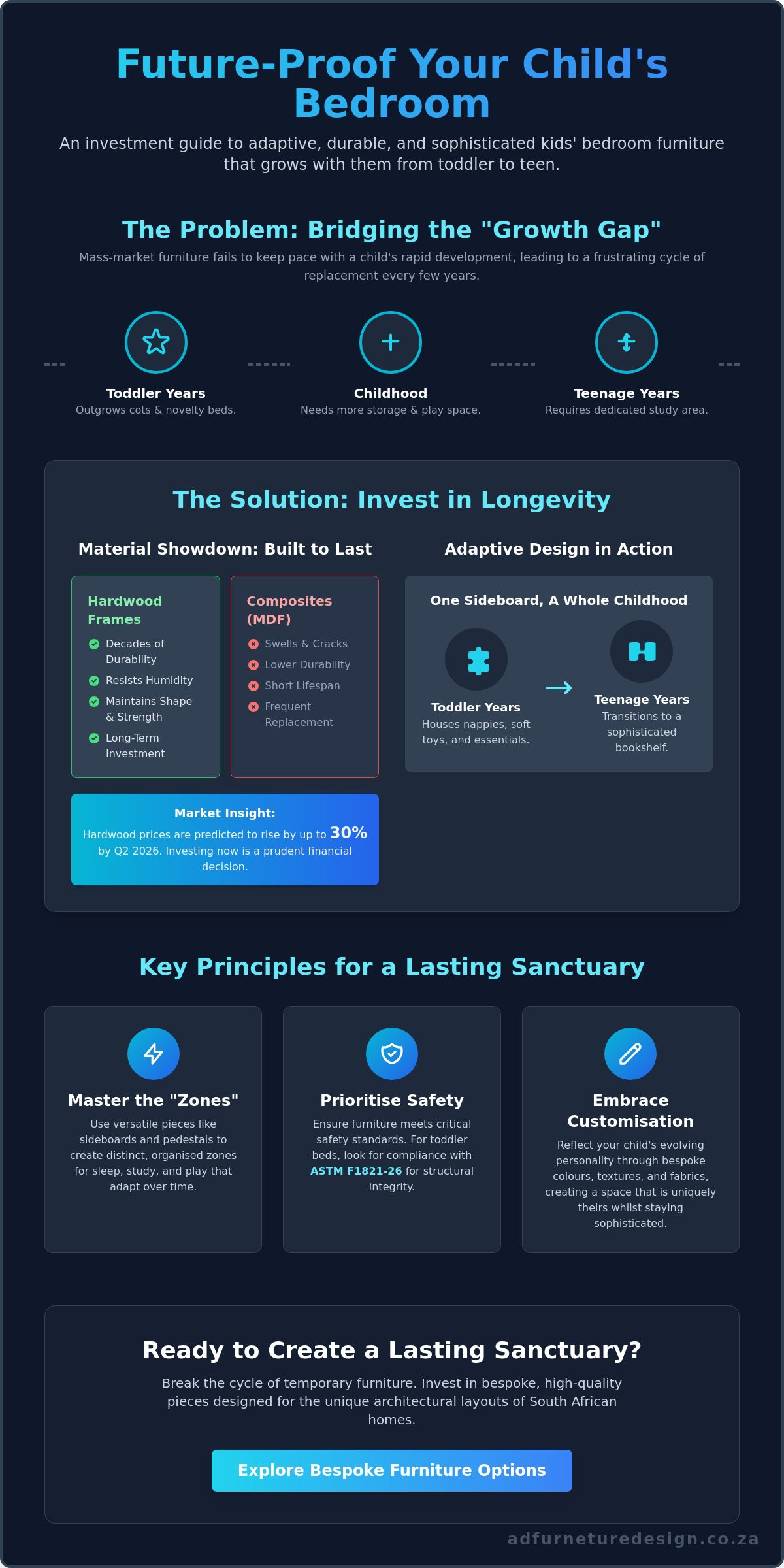
Many South African parents encounter the "Growth Gap", a cycle where children outpace their environment roughly every three years. From the transition out of a cot to the sudden need for a dedicated study desk, the physical and psychological requirements of a child change at a pace that mass-produced items cannot match. By choosing bespoke, high-quality foundations, you can future-proof your investment. This approach ensures the core elements of the room remain steadfast whilst the smaller details adapt to the child's blossoming identity.
The Philosophy of Evolution
A common mistake is investing in a toddler bed that has a lifespan of only two or three years. A more sophisticated approach involves selecting a full-sized bespoke headboard and frame from the start. This provides a sense of continuity as the child moves through different child development stages; the furniture remains a constant anchor in their world. By prioritising ergonomic support and classic silhouettes, you ensure the kids bedroom furniture stays relevant even as trends shift from whimsical to mature. It is about creating a space that feels grounded and intentional rather than cluttered and temporary.
Balancing Playfulness with Sophistication
Infusing a room with personality shouldn't mean sacrificing elegance. You can achieve a playful atmosphere through customisable accents like bespoke fabrics and textures rather than novelty shapes that are quickly outgrown. For example, integrating sleek sideboards offers a versatile storage solution that grows with your needs. In the early years, these pieces house nappies and soft toys; later, they seamlessly transition into sophisticated bookshelves for a teenager's growing collection. Selecting shapes that feel youthful yet refined ensures the room fits perfectly within the context of a modern, stylish home. It allows the child to express themselves whilst maintaining the high standards of craftsmanship you expect for your living space.
How to Choose Durable Materials That Withstand Childhood
A child’s bedroom is the most high-traffic zone in any South African home. It isn't merely a place for rest; it’s a gymnasium, an art studio, and a fortress. Because of this intense activity, the materials used in kids bedroom furniture must possess a resilience that goes beyond standard domestic requirements. While mass-market retailers often rely on cheaper composite materials like MDF or particle board, these alternatives frequently swell or crack under the pressures of South African humidity and active play. With hardwood lumber prices predicted to rise by as much as 30% by the second quarter of 2026, investing in quality timber now is a prudent financial decision for the long term.
Hardwood frames represent a superior choice for longevity. Unlike their composite counterparts, solid timber maintains its shape and strength over decades. This durability ensures that the furniture doesn't just survive the toddler years but remains a stable fixture as your child grows into a teenager. Choosing the right finish is equally critical. A high-quality sealant allows for effortless maintenance, ensuring that scuffs, sticky fingerprints, and spills don't become permanent features of the room. It's about selecting a surface that can be wiped clean in seconds without degrading the wood beneath.
Fabric Selection for Active Spaces
When selecting upholstery for headboards or seating, the rub-count is your most reliable metric. We recommend fabrics with a high Martindale rating to ensure they withstand years of friction and play. Opting for textured weaves or slightly darker palettes can cleverly disguise the inevitable marks of childhood. Through bespoke customisation, you can select high-performance fabrics that are specifically engineered to be wipe-clean, allowing you to maintain a pristine aesthetic without constant worry. If you're ready to begin selecting these refined materials, you can explore our bespoke furniture options to find the perfect match for your home.
Construction Quality: Beyond the Surface
The longevity of a piece is often hidden within its joints. Bespoke joinery, such as mortise and tenon or dovetail joints, offers a level of permanence that the screws and dowels found in flat-pack furniture simply cannot provide. This superior craftsmanship is vital for weight-bearing capacity, particularly in beds and pedestals that may occasionally support the weight of a parent during storytime. In the context of South African manufacturing, structural integrity is defined as the meticulous fusion of premium raw materials and expert joinery techniques to create a piece that remains stable and safe under constant use. By prioritising these invisible details, you ensure your furniture remains a reliable part of your child's life for years to come.
Designing for Longevity: Bespoke vs. Off-the-Shelf Options
Choosing between off-the-shelf convenience and bespoke craftsmanship is a choice between the fleeting and the enduring. While imported, ready-to-ship items offer instant gratification, they rarely account for the specific needs of a growing family or the architectural nuances of your home. When you analyse the cost-per-year of kids bedroom furniture, the financial argument for bespoke becomes clear. A mass-produced bed might require replacement after just three years due to structural fatigue or shifting tastes. In contrast, a masterfully crafted piece serves your child for over a decade. The initial investment is higher, yet the longevity ensures you aren't trapped in a cycle of constant repurchasing.
South African homes often feature unique architectural quirks, from high Victorian ceilings to modern, angular footprints. Standardised furniture sizes often leave awkward gaps or fail to utilise valuable floor space effectively. Bespoke design allows you to reclaim these areas, turning an odd corner into a tailored storage nook or a window alcove into a built-in daybed. You gain the freedom to select specific colour palettes and fabric textures that resonate with your home’s wider design language. While the lead times for custom manufacturing are longer than picking up a box from a warehouse, the result is a piece of heritage quality that doesn't need to be replaced. Quality takes time, and the wait is a small price for a lifetime of reliability.
The Value of Customisation
Precision is the hallmark of a well-designed room. By tailoring dimensions to your specific floor plan, you maximise the area available for play and study. This level of detail allows you to harmonise the child's room with the rest of your home, perhaps by matching headboard fabrics to the custom sectional couches in South Africa located in your living area. Standard catalogues simply cannot offer the same level of cohesion or the unique storage solutions required for a truly organised environment. It's about creating a seamless flow from the lounge to the nursery.
Sustainability and Ethical Making
Choosing "made-to-order" is a powerful stance against the waste inherent in the global furniture industry. Buying one high-quality piece that lasts twenty years is fundamentally more sustainable than cycling through disposable alternatives. This approach supports local artisans and keeps craftsmanship alive within our borders. By reducing the reliance on mass-production chains, you ensure that your kids bedroom furniture is created with a focus on excellence rather than volume. It's a choice that benefits both your home and the local economy, reducing waste through a deliberate and thoughtful manufacturing process.
How to Organise Your Space for Every Stage of Development
A child’s room is a dynamic ecosystem that must adapt as their daily activities shift from imaginative play to focused academic work. To manage this evolution, we categorise the environment into the "Zones of Childhood": Sleep, Play, Study, and Storage. Mapping these areas out before selecting your kids bedroom furniture ensures that the room remains functional rather than becoming a cluttered afterthought. By strategically placing pieces to clear the centre of the room, you provide the essential floor space needed for physical movement and creative expression during those high-energy younger years.
Placement is as much about light as it is about floor area. Position study desks near natural light sources to enhance focus, while keeping the sleeping zone in a calmer, dimmer corner of the room to encourage rest. This deliberate arrangement anchors the room’s centre, making the space feel expansive and intentional. When the layout is designed with future transitions in mind, the room feels like a curated sanctuary rather than a temporary storage unit for toys.
The Storage Strategy
Effective storage is the secret to maintaining a sophisticated aesthetic in a busy household. Custom sideboards offer a sleek solution for "hidden" storage, easily swallowing bulky toys during the toddler years before transitioning into elegant repositories for hobby equipment or linens as they grow. Similarly, bespoke pedestals serve a dual purpose; they begin as a home for nightlights and storybooks and eventually evolve into sturdy supports for heavy textbooks and tech accessories. Designing drawers with soft-close mechanisms and accessible heights empowers children to take pride in their space, teaching them to organise their belongings from an early age.
Creating a Productive Study Nook
As academic demands increase, the play corner must naturally yield to a dedicated workspace. This transition is most successful when the desk and chair are ergonomically tailored to the child's specific proportions. Chair height and desk depth are not mere details; they are fundamental to supporting a growing body and preventing long-term postural issues. A well-organised, dedicated study zone provides the psychological structure a child needs to focus, directly influencing their behaviour and attitude towards learning. To begin planning your child's ideal workspace, you can view our collection of bespoke bedroom furniture and start your design journey today.
Crafting a Bespoke Sanctuary with AD Furniture Design Pty Ltd
Transforming a house into a home is a deeply personal journey. When you choose AD Furniture Design Pty Ltd, you aren't just selecting a product from a catalogue; you're entering a visionary partnership. Our process moves meticulously from your initial vision to final manufacture, ensuring every detail aligns with your lifestyle and your child's future. Owning a piece of South African made furniture carries a distinct sense of pride. It represents a commitment to local excellence and the enduring value of traditional craftsmanship in a world of fleeting, mass-produced goods. This is about more than just filling a room; it’s about creating a legacy of quality.
We believe that kids bedroom furniture should be as refined as any other piece in your home. By moving away from disposable trends, you invest in an environment that nurtures your child's development whilst maintaining a sophisticated aesthetic. Our role is to act as your expert guide, helping you realise a vision that balances practical needs with an aspirational feel. This collaborative approach ensures that the final result is a unique sanctuary that reflects your family's identity and values.
The Bespoke Experience
We work closely with you to curate the perfect environment for your child. This involves more than just picking a size; it’s about choosing the precise upholstery, colours, and textures that will define the room’s atmosphere. Whether you're looking for high-performance fabrics that withstand active play or sophisticated textures that transition into the teenage years, our team provides expert guidance. Our commitment to quality, heritage, and excellence is visible in every stitch. This dedication to detail is why our modern bedroom furniture remains the favourite choice for residential clients who refuse to compromise on style or substance. Every piece is a testament to the master craftsman's skill.
Next Steps for Your Home
Starting your custom design journey is a simple yet inspiring process. It begins with a conversation about your specific needs, followed by a collaborative design phase where we translate your ideas into a tangible plan. During manufacturing, you can expect a steady, reassuring rhythm as our master craftsmen bring your piece to life. Beyond kids bedroom furniture, we invite you to explore how our design philosophy extends to the rest of your living space. You might find inspiration in our latest collections of comfortable loungers or sleek sideboards, each designed with the same focus on longevity and aesthetic appeal. Take the step from inspiration to a personalised creation today and invest in a sanctuary that grows alongside your family.
Begin Your Journey Toward an Evolving Sanctuary
Investing in kids bedroom furniture is more than a simple purchase; it’s a commitment to your child's developmental journey. By prioritising adaptive design and high-performance materials, you eliminate the frustration of the "Growth Gap" and create a space that remains functional for years. We've explored how expert South African craftsmanship and bespoke joinery provide a foundation of structural integrity that mass-produced alternatives simply cannot match. From selecting the perfect upholstery to tailoring dimensions for unique room layouts, every choice you make today ensures a sophisticated environment for tomorrow.
Your home deserves pieces that reflect your identity and values. With fully customisable fabrics and colours, you have the creative freedom to design a room that is both playful and elegant. Our bespoke designs are built for longevity, ensuring that your investment survives every stage of childhood with quiet confidence. Start designing your child’s bespoke bedroom furniture today and experience the lasting value of true excellence. We look forward to helping you realise a vision that is as unique and ambitious as your family’s future.
Frequently Asked Questions
What is the best material for kids bedroom furniture?
Solid hardwood is the premier choice for durability and longevity in a child's environment. Unlike composite materials that may warp or swell under South African humidity, hardwoods provide a robust frame that withstands the rigours of active play. Choosing solid timber ensures the piece remains a permanent fixture in your home rather than a temporary solution that requires replacement after a few years of use.
How do I choose a bed that my child won’t outgrow in two years?
Opt for a full-sized bed frame with a sophisticated, timeless headboard instead of a toddler-specific model. Transitioning straight to a standard single or three-quarter bed allows the furniture to accommodate your child through every growth spurt. By selecting classic silhouettes and neutral foundations, you ensure the aesthetic remains relevant from the early years into the teens without needing a complete room overhaul.
Is bespoke furniture safe for toddlers and young children?
Bespoke furniture is often safer than mass-produced items because of the meticulous attention to detail during the manufacturing process. Every piece is crafted with rounded edges, non-toxic finishes, and superior structural integrity to ensure stability. You should always verify that your custom maker adheres to the latest safety standards, such as the ASTM F1821-26 regulations, to ensure total peace of mind for your family.
Can I customise the fabric on a kids headboard to match my home decor?
Customisation is a cornerstone of the bespoke experience, allowing you to select from a vast array of colours, textures, and high-performance fabrics. This flexibility ensures your kids bedroom furniture complements the sophisticated design language of your wider home. You can choose wipe-clean textiles that offer both elegance and practical resilience, ensuring the room feels like a curated extension of your personal style.
How long does it take to manufacture custom kids furniture in South Africa?
The lead time for bespoke manufacturing typically ranges from six to ten weeks, depending on the complexity of the design and material availability. This period allows master craftsmen to source premium timber and meticulously execute every joint and stitch. While this is longer than off-the-shelf options, the deliberate pace ensures a level of excellence and longevity that ready-to-ship items simply cannot replicate.
Should I choose a single or three-quarter bed for a child’s room?
A three-quarter bed is often the superior choice if floor space allows, as it provides extra comfort for growing teenagers and parents during storytime. While a single bed is a classic space-saver, the three-quarter width offers a more mature feel that lasts well into the high school years. Consider the room’s layout and future study needs carefully before making your final selection to ensure long-term comfort.
How do I keep upholstered kids furniture clean?
Maintaining upholstered kids bedroom furniture is simple when you select high-performance fabrics with a high rub-count. Frequent light vacuuming and immediate spot-cleaning with a damp cloth are usually sufficient for most everyday spills. Many modern textiles are treated with stain-resistant finishes that allow marks to be lifted easily without damaging the integrity of the weave or the vibrancy of the colour.
What are the benefits of buying locally manufactured furniture?
Buying locally supports South African artisans and ensures your furniture is built to withstand the specific environmental conditions of our region. Local manufacturing significantly reduces the carbon footprint associated with international shipping and allows for a more personal, collaborative design process. You gain a piece of heritage quality while contributing to the growth of regional craftsmanship and excellence within our borders.